

Chemical Safety Protocols – Redux
At GIW, employee safety in the workplace is a top priority, especially when hazardous chemicals are involved. Although not everyone uses them every day, we are responsible for keeping everyone up to date about their use. That’s why we follow carefully designed safety procedures, and make sure all of our employees have the training and tools for safely using dangerous materials. Today, we review our chemical safety policy, look at how we manage and store chemicals on site, and offer some safety tips for handling chemicals on the job.
Chemical safety policy
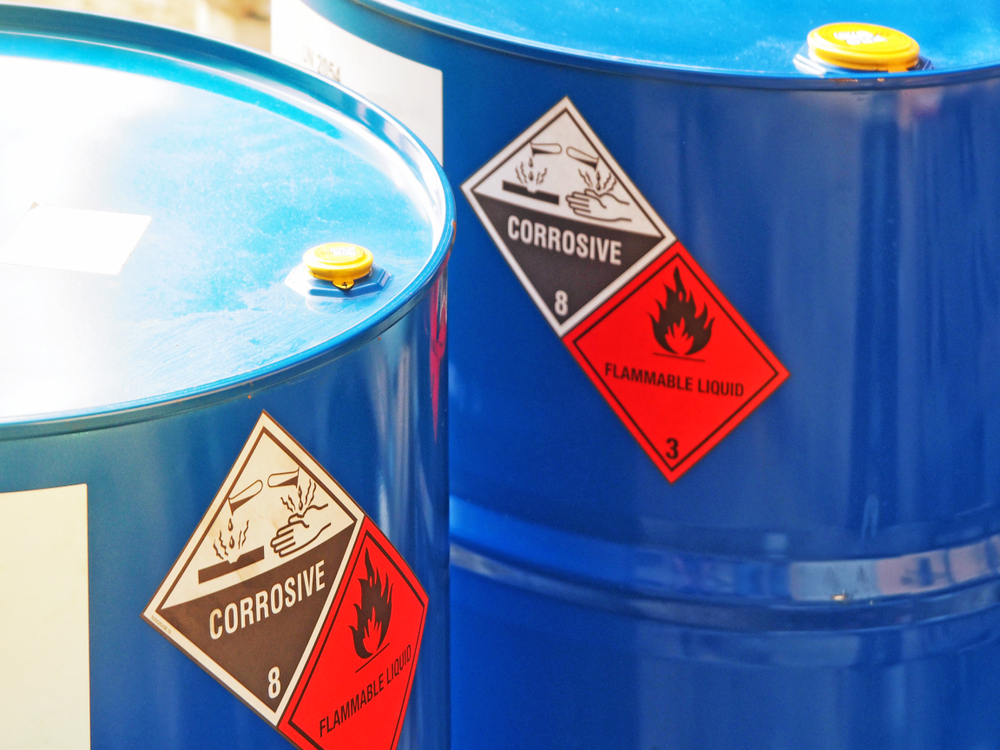
A lot has changed in the five years since our last chemical safety review; however, our commitment to safety remains a constant. Our Hazard Communication (HAZCOM) plan outlines the Occupational Safety and Hazard Association’s (OSHA) Hazard Communication Standards (HCS) for ensuring workplace chemical safety. This helps us identify and track the hazardous chemicals that enter and exit our workplace, and keeps all employees informed about the materials they handle. Our HAZCOM plan also outlines the potential health hazards of chemicals in the workplace, from such physical hazards as flammability and corrosion to “invisible” hazards like carcinogenicity.
Here are the four requirements for chemical information in the workplace according to our HAZCOM plan:
- Hazard classification: OSHA’s HCS requires us to provide specific classifying criteria for health and physical hazards, and for mixtures of chemicals.
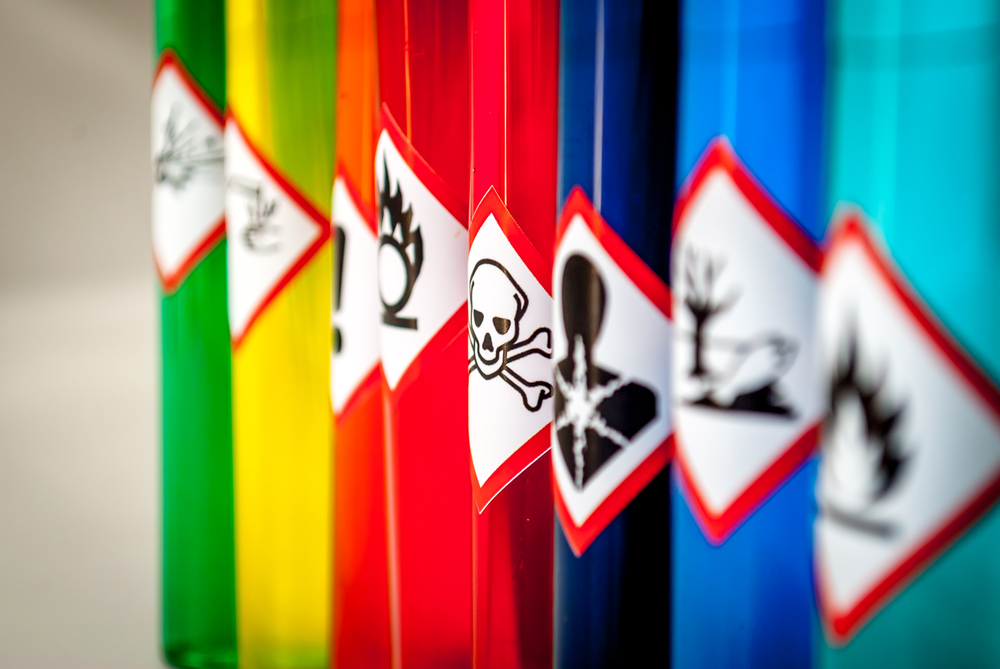
- Chemical labels: We must evaluate the hazards of the chemicals we use and provide a label for each that includes a harmonized signal word (e.g., danger, warning), a pictogram (e.g., health hazard, flammable, or irritant), and a hazard statement, which describes the nature of the hazard. We also provide precautionary statements for each chemical, which help our employees minimize and/or prevent its adverse effects.
- Material safety data sheets (MSDS): Like labels, these communicate the hazards of various chemical products. These sheets are required for each chemical and at every facility. They follow a uniform format to help employees identify, handle, and store chemicals.
- Information and training: We have a written plan for implementing and enforcing these standards. We provide annual employee training on how to handle and store chemicals. Additionally, we conduct periodic walk-throughs of chemical safety.

Managing chemicals on site
To stay compliant with chemical safety standards and keep all employees safe from hazards, we have a detailed process for maintaining and storing chemical materials. Here is how we manage our chemicals on site:
- Maintain a current inventory: We last updated our chemical inventory about five years ago, but each department is being evaluated to see what chemicals have been eliminated, replaced, or added. We also have partnered with a third party company, MSDS Source, to manage our safety data sheets. All sheets are available electronically and printed copies can be found around the workplace.
- Listing chemicals in job safety analysis: With careful documentation and labeling, we make sure everyone knows what hazardous materials may be used in a particular job, and how they are dangerous.
- Providing required personal protective equipment (PPE): We provide all employees with the masks, gloves, goggles, and other items that may reduce exposure to chemical hazards.
In recent years, we have improved the chemical storage areas throughout the GIW campus and identified specific material handlers to transport chemicals on the property.
Safety tips for handling chemicals
We encourage all of our employees to follow chemical safety practices both on and off the job. Although household objects like cleaner and bleach may seem benign in their smaller quantities, it can be easy to forget their dangers as well. Here are some everyday tips for using chemicals at home:
- Follow all instructions as listed: Household chemical products are required to come with many of the same labels and hazard statements as seen on the job, so follow them carefully.
- Wear protective equipment: Depending on the substance, goggles, gloves, and a mask may be necessary. Make sure the area of use for the chemical is well-ventilated!
- Do not mix chemicals: Some everyday chemicals can be deadly when combined with others. Most products have clear labels about these risks, but you should practice additional caution when using multiple products.
- Store properly: Always keep chemicals in their original containers and away from children or pets. You should store chemicals away from areas with flames or sharp objects, such as the kitchen.
- Dispose properly: Do not empty leftover chemicals into household drains unless explicitly permitted, and never dump into public drains or gutters. When in doubt, contact your local hazardous waste program.
We are always working to ensure our employees handle chemicals safely in and out of the workplace. By understanding and following our chemical safety plan, and keeping in mind some simple tips, we can all do our part to keep the workplace safe.